Focus on diagnostics
We process the data
Cloud-based genetic diagnostics to accelerate laboratory workflows and enhance patient care.
One turnkey solution for all clinical NGS applications
Solution
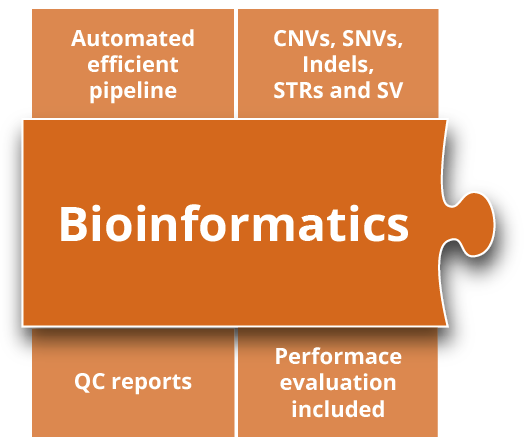
The varvis® genomics software is a complete solution for clinical diagnostics, supporting both short- and long-read sequencing. It is designed to streamline the entire NGS workflow, including raw data processing, genomic data management, and variant interpretation. The platform integrates automated analysis of SNVs, CNVs, STRs, and SVs demonstrating robust performance across diverse panel sizes, including whole genome sequencing
Bioinformatics
Truly hands-free.
Our automated bioinformatics pipeline processes raw short- and long-read sequencing data from bcl, fastq or bam files. On completion of the bioinformatics analyses, including alignment and variant calling of SNV, CNVs, STRs and SVs, all results are annotated and visualized in the varvis® software automatically. Performance test reports are provided as a service – updates are included.
varvis® genomics software
Made for use in clinical diagnostics
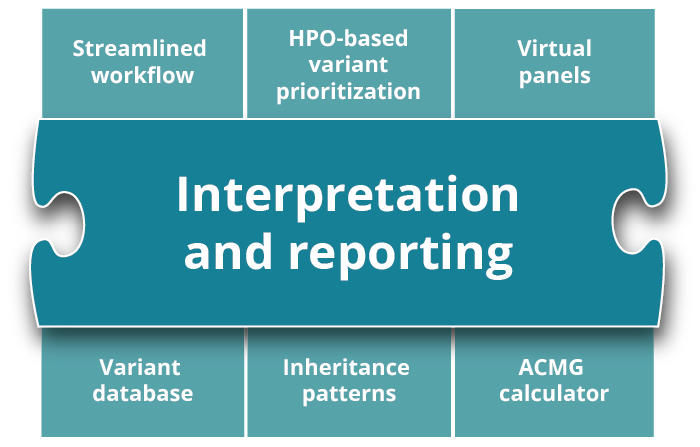
The varvis® software is a clinical decision support system (CDS) and allows you to review, filter, and classify genetic variants. In addition, it includes your own comprehensive variant database. It supports the clinical decision-making process and is the first genomics end-to-end software certified as IVDR Class C device.
Annotation
Always up to date
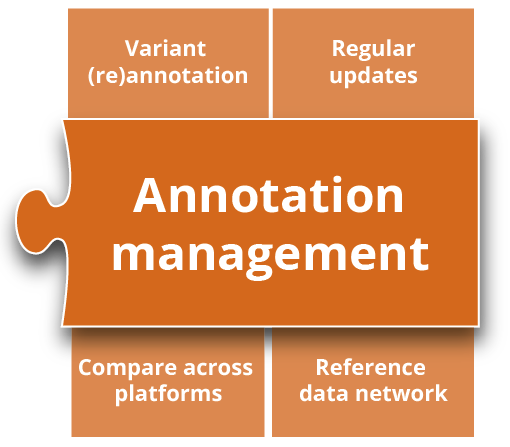
Our reference database, allexes®, provides the data for variant annotation to the varvis® software. The allexes® database does not only deliver the most recent versions of public databases, but also provides access to aggregated genomic reference data from all our users while continuing to be compliant with HIPAA and EU regulations.
Key benefits
Automated
quality control
Important quality metrics are monitored automatically for every single NGS sample, but also across batches over time. Don't waste a moment on manual QC.
Push
the button
Convenient filtering options such as inheritance filters and virtual panels allow you to filter from thousands of detected SNVs and CNVs. Within seconds.
Supreme expert support
Our dedicated team provides first-class support regarding workflow optimization, technical issues, training and documentation – even for the tricky cases. We are here to help!
Trust
your results
Simply sequence the appropriate reference sample to validate your workflow – we take care of the rest and provide you with a performance test report. Regular updates are included.
Use cases

Targeted
panels
Identify rare and causative SNVs and CNVs in a single process of proven performance. Replace conventional PCR-based methods.

Whole exome
sequencing
Do you need more than 15 minutes to interpret a whole exome? Accelerate WES interpretation by combining phenotype, family and inheritance information.

Long-read sequencing
Are you ready for long read sequencing in clinical diagnostics? Discover the dark genome and detect repeat expansions with confidence.

Cancer
diagnostics
Detect somatic variants with high sensitivity and specificity using state-of-the-art molecular barcoding technologies.

Carrier
screening
Even the most complex scenarios are well covered in a single carrier screening filter to solve your cases with just a few clicks.
See for yourself how the varvis® software can accelerate your laboratory workflows and increase your diagnostic yield.
Testimonials

University of Magdeburg

University of Leipzig

Synlab Zentrum für Humangenetik Mannheim

University of Göttingen

Gemeinschaftspraxis für Humangenetik & Genetische Labore Hamburg
Read more
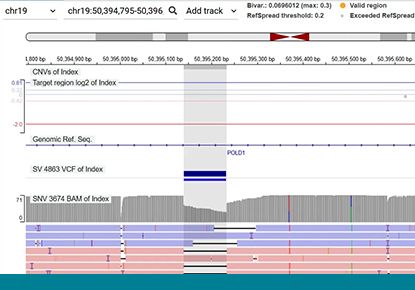
Can long-read sequencing replace array diagnostics in clinical routine?
by Dr. Ben Liesfeld, June 18, 2026
This white paper highlights how long-read sequencing is emerging as a strong alternative to array-based diagnostics in clinical genomics. It also explains how combining structural variant (SV) calling with coverage-based CNV analysis enables comprehensive detection across variant types, and how the varvis® platform brings these capabilities together in a unified long-read workflow.
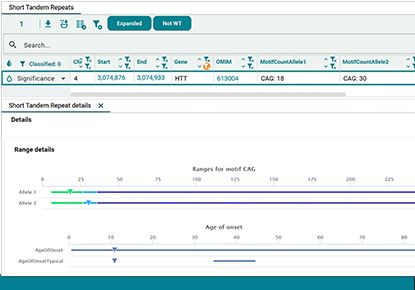
Huntington’s disease: from understanding repeat instability to editing the genetic code
by Dr. Roberta Trunzo, April 14, 2026
Huntington’s disease (HD) has long been known as a genetic disorder caused by CAG repeat expansions in the HTT gene. Yet for decades, one key question remained unanswered: Why does the mutation remain silent for years, only to trigger neurodegeneration later in life? Recent discoveries have reshaped our understanding — and, for the first time, offered a way to intervene at the genetic level.
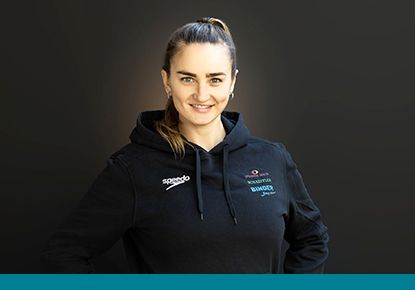
Elena is unstoppable
by Ulrike Schmidt, February 27, 2026
Each year, Rare Disease Day offers the human genetics community a special opportunity to raise awareness of rare diseases and the people living with them. This year, we would like to introduce you to Elena Semechin, a two-time Paralympic winner, and our partnership.